
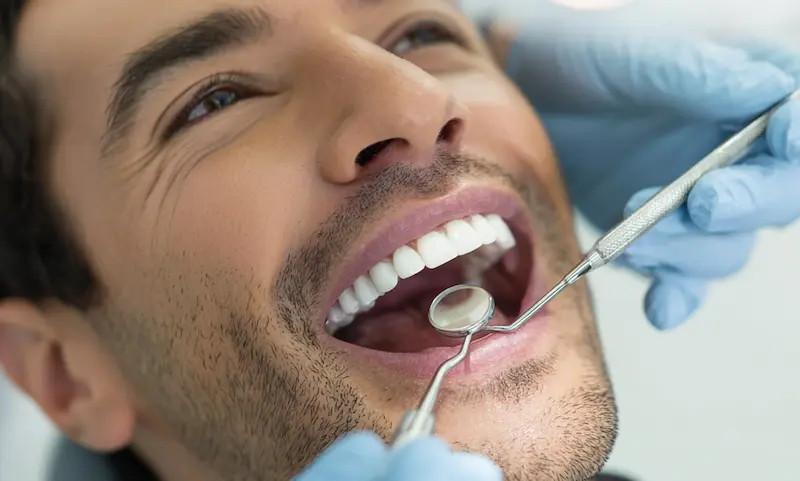
Dental Cleaning in Bogotá: How Often to Get It and When You Shouldn't Wait Any Longer. Many people arrive for their first dental cleaning after years of postponing it. The reason is simple: no one had clearly explained what happens when tartar builds up, what signs indicate it's time to go, and what problems can be avoided with a timely appointment.
The problem isn't just aesthetic. When plaque mineralizes—meaning it hardens—and forms dental calculus, it can't be removed with a brush or floss: it requires professional removal. The longer it goes without checkups, the more likely a simple prophylaxis today becomes a complex periodontal treatment tomorrow.
At Natural Smile Colombiain Bogotá, a dental cleaning isn't treated as "polishing teeth." It's used as an entry point to check gums, patient history, actual tartar buildup, and risk signs that often go unnoticed until they become truly bothersome.
What Is a Professional Dental Cleaning and What Does It Remove?
A professional dental cleaning—also called dental prophylaxis—aims to remove bacterial plaque, tartar (dental calculus), and superficial stains that accumulate even in people with good daily hygiene. It's performed with specialized instruments: ultrasound, curettes, and polishers that reach areas the brush can't, especially near the gum line and between teeth.
This doesn't compete with your home routine: it complements it. The brush and floss control daily plaque, but they don't remove already adhered tartar. They are two levels of maintenance that work together.
One point many patients appreciate hearing clearly: a dental cleaning is not a whitening treatment.It can improve teeth appearance by removing external stains from coffee, tobacco, or dark drinks, but it doesn't change the internal enamel tone like a professional whitening does.
How Often Is a Dental Cleaning Recommended?
The honest answer isn't always "every six months," though that's still a useful reference for most. Current clinical logic is more personalized: frequency depends on each patient's real risk, not a fixed rule.
The NHS (UK's National Health Service, one of the world's largest and most consulted public health institutions) states that intervals between checkups can vary from 3 months to 1 year based on individual risk. What's constant is the logic: bacterial plaque can start hardening into tartar in as little as 48 hours if not removed properly, so daily hygiene and professional checkups complement each other permanently.
Practical guide to orient yourself:
Patient Profile | Suggested Frequency |
Healthy gums, good hygiene, little tartar | Every 6 months |
Fast tartar buildup, smoker, frequent coffee/wine consumer | Every 4 months |
Braces or fixed orthodontics | Every 3 - 4 months |
History of gingivitis or periodontitis | Every 3 months |
Pregnancy, diabetes, or other systemic conditions | Every 3–4 months per clinical judgment |
Not Everyone Needs the Same Frequency
Some people form tartar much faster without noticing, due to saliva composition, hard-to-reach areas, crowding, or old restorations that retain more plaque. Sometimes it's simply blind spots in brushing technique that no one has corrected.
Others have normalized symptoms they shouldn't: gums that "just bleed a little," constant halitosis—bad breath—or sensitivity that comes and goes. Gingivitis can set in within days if plaque isn't removed; if tartar advances unchecked, periodontal risk grows silently.
That's why at Natural Smile Colombia, cleaning isn't offered as an isolated service. The assessment includes gum diagnosis, restoration review, patient history, and—when needed—referral to orthodontics, oral rehab, or dental aesthetics without starting from scratch elsewhere. Natural Smile Colombia la limpieza no se ofrece como un servicio aislado. La valoración incluye diagnóstico de encías, revisión de restauraciones, historial del paciente y —cuando aplica— derivación a ortodoncia, rehabilitación oral o estética dental sin que el paciente tenga que empezar de cero en otro lugar.
Signs It's Time to Stop Postponing

These are concrete signals that you shouldn't wait for the next scheduled checkup:
- Bleeding when brushing or flossing —not normal even if "just a little"
- Inflamed, red, or sensitive gums to touch or chewing
- Persistent bad breath that doesn't improve with brushing
- Visible tartar on the lower part of teeth or between them
- Rough feeling when running your tongue over teeth
- Teeth looking longer —may indicate gum recession
- Increased sensitivity to cold or heat without clear cause
When tartar isn't removed in time, gingivitis can progress to periodontitis—a bacterial infection that destroys supporting tooth tissue and, in advanced stages, causes mobility or tooth loss.
If you recognize any of these, know that coming today—even if the problem has advanced—is still better than waiting longer. In preventive dentistry, acting sooner almost always means a shorter, more comfortable path with better results. No one will judge you for the delay; what matters is what you decide now.
Does It Hurt? How Long Does It Take? Difference from Deep Cleaning?
Does it hurt? For most patients, no. There may be mild discomfort if gums are inflamed, there's heavy tartar, or prior sensitivity. When needed, the dentist can apply topical or local anesthesia for complete comfort.
How long does it take? A standard preventive procedure lasts 30–60 minutes. If there's more buildup, hard-to-reach areas, or periodontal needs, time and plan adjust.
Difference from deep cleaning —this is one of the most confusing doubts, rarely clarified by competitors:
Dental Cleaning (Prophylaxis) | Deep Cleaning (Scaling and Root Planing) | |
Objective | Preventive maintenance | Periodontal disease treatment |
Work Area | Tooth surface and gum line | Periodontal pockets and tooth root |
Indication | Healthy gums or low risk | Advanced gingivitis or periodontitis |
Frequency | Routine (every 3–6 months) | Per clinical evolution |
Duration | 30–60 minutes | May require multiple sessions |
Situations exist where a precise diagnosis is worth more than a quick appointment: if gums are inflamed, there are periodontal pockets, or bone damage signs, basic prophylaxis isn't the right treatment.
What to Expect After the Cleaning?
Usually, you leave with a fresher mouth, smoother teeth, and an immediate clean feeling. If there were superficial stains from coffee, tobacco, or drinks, many notice visual improvement that day.
There may be light, temporary sensitivity in the first 24–48 hours, especially with heavy tartar or irritated gums. It fades quickly if it was preventive without major issues.
Most importantly, after leaving: professional cleaning doesn't replace daily routine. The ADA (American Dental Association, the reference dental body in the US) recommends brushing twice a day, daily interdental cleaning with floss or interproximal brush, and regular checkups. Home care is the real maintenance between visits.
How to Choose a Clinic for Dental Cleaning in Bogotá?
Searching for dental cleaning in Bogotá Searching for dental cleaning in Bogotá shouldn't lead you to choose just by price or proximity. What's truly valuable is a clinic that assesses your real situation first: gums, patient history, tartar buildup, restorations, orthodontics use, bleeding.
It also matters that the team can support you beyond basic prophylaxis. If caries, gingival inflammation, aesthetics, or rehab needs arise during assessment, you get continuity in one place without starting over.
At Natural Smile Colombiain Bogotá's Chicó, every assessment starts by understanding the patient's real situation—not offering a standard package. Before any procedure, the team checks gums, history, buildup type, and individual risks. This defines if you need routine prophylaxis, periodontal management, or entry to a fuller plan in general dentistry, aesthetics, orthodontics, or oral rehab. For those postponing, that clarity from the start changes the experience completely.
Frequently Asked Questions About Dental Cleaning in Bogotá
(Estas preguntas están en formato pregunta-respuesta para que Google las capture como fragmentos destacados y resultados «People Also Ask» en los resultados de búsqueda, posicionando búsquedas adicionales de cola larga.)
Does dental cleaning hurt?
For most patients, no. There may be discomfort if gums are inflamed, prior sensitivity, or heavy tartar. When needed, the dentist applies topical or local anesthesia.
How often should I get a dental cleaning in Bogotá?
Depends on your profile. For many, every 6 months works well. If you have braces, frequent bleeding, periodontal history, or fast tartar, every 3–4 months may be better.
Does dental cleaning whiten teeth?
Not exactly. It removes superficial stains and improves appearance, but doesn't lighten internal enamel color like professional whitening.
How long does a dental cleaning take?
30–60 minutes for standard preventive cases. If periodontal approach or heavy buildup needed, time and plan change.
What if I never get a dental cleaning?
Plaque hardens into tartar, favoring gingival inflammation, higher caries risk, and—if unchecked—periodontal disease with supporting bone compromise. The longer it goes, the less simple the solution.
Can I get a dental cleaning with braces?
Yes, and it's more important. Braces hinder full hygiene in spots and favor plaque around attachments. Recommended every 3–4 months with fixed braces. Removable aligners make hygiene easier, but pro checkups still needed.
How do I know if I need a dental cleaning or deep cleaning?
Only clinical diagnosis determines it. Healthy gums and moderate tartar likely mean routine prophylaxis. Frequent bleeding, pockets, or persistent inflammation may need scaling and root planing.
How much does a dental cleaning cost in Bogotá?
Price varies by clinic, oral health status, and if diagnostic assessment included. Best to schedule an evaluation with diagnosis, as it defines basic prophylaxis or specific management.
A Small Decision That Can Avoid a Big Problem

Postponing a dental cleaning rarely feels urgent... until it is. When it finally bleeds, hurts, or looks too bad, you're often not just fixing tartar buildup, but the start of a more complex, costly issue.
If searching for dental cleaning in Bogotá,the best appointment isn't always the cheapest or fastest: it's the one starting with real diagnosis, explaining your mouth's needs, and proposing a clinically sound next step.
 Español
  English