

Oral Rehabilitation in Bogotá: Restore Your Bite and Your Confidence If you've started chewing on only one side, avoiding certain foods, or no longer smiling with the same ease, your mouth is probably telling you that something needs attention.
Sometimes the problem is obvious: a tooth is missing, a crown has fractured, or a denture no longer feels stable. In other cases, it develops gradually. Teeth wear down, the bite changes, sensitivity increases, or you start to feel fatigue in your jaw.
Many people get used to these signs. They learn to eat carefully, hide their teeth in photos, or avoid using one area of their mouth. What started as a minor discomfort ends up affecting the way they eat, speak, and connect with others.
The oral rehabilitation options in Bogotá can help restore that function and, in many cases, the confidence to smile as well. But it doesn't start with choosing a crown or an implant. It starts with understanding what is happening with your teeth, your gums, and your bite. At Natural Smile & Dental Care, the goal is to guide you through that process with a clear evaluation, easy-to-understand options, and a plan tailored to each patient's real needs.
At Natural Smile & Dental Care, the goal is to guide you through that process with a clear evaluation, easy-to-understand options, and a plan tailored to each patient's real needs.
What Is Oral Rehabilitation?
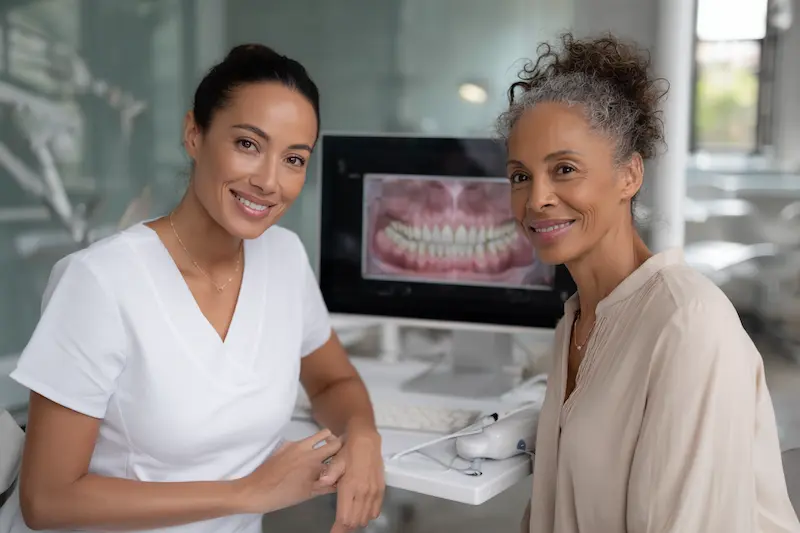
Oral rehabilitation is the set of treatments designed to restore teeth that are damaged, worn, fractured, weakened, or missing. Its purpose is not only to improve appearance, but also to restore function, comfort, and stability to the mouth.
This field is closely related to prosthodontics, the specialty that covers the diagnosis, planning, rehabilitation, and maintenance of oral function, comfort, appearance, and health in patients with deteriorated or missing teeth.
That's why rehabilitating a mouth doesn't simply mean “putting in teeth.” Before deciding on any procedure, it's necessary to understand what the patient still has, what needs to be rebuilt, and how the remaining teeth should work together.
An oral rehabilitation may take into account the bite, chewing, gums, tooth structure, old restorations, bruxism, and the aesthetics of the smile. These elements are connected: if a tooth is missing, the contacts in the bite can change; if there is wear, tooth height can decrease; if there is bruxism, restorations can be exposed to excessive pressure.
The desired result is a mouth that looks natural, works properly, and can be maintained with regular checkups and proper care.
How to Know If You Need It
You don't need to wait until you've lost several teeth to see a specialist. In some cases, oral rehabilitation is recommended precisely to keep damage from progressing.
A common sign is difficulty chewing. If you can no longer eat certain foods, feel pain when biting, or only use one side of your mouth, there may be a dental, gum, or bite problem that should be checked.
It's also important to pay attention to wear. Teeth can lose structure over time due to an unstable bite, faulty restorations, or bruxism, which is clenching or grinding your teeth, consciously or unconsciously.
Losing one or more teeth is another common reason to request an evaluation. Although it may seem possible to adapt at first, the neighboring teeth can shift and change the way chewing forces are distributed. It can also affect your speech, your appearance, and your confidence when you smile.
Old crowns, fixed bridges, and dentures also need to be checked when they become loose, fracture, trap food, or no longer feel comfortable. Just because a restoration is still in your mouth doesn't necessarily mean it's doing its job well.
Finally, aesthetic concerns also deserve to be heard. Avoiding smiling, covering your mouth, or feeling uncomfortable when speaking can affect your social and professional life. This isn't about vanity: when a person stops expressing themselves freely because of their teeth, there is a real impact on their well-being.
None of these signs alone confirms that you need a full rehabilitation. However, they do indicate that an evaluation can help you understand the source of the problem and the options available.
Diagnosis Must Come First
Oral rehabilitation shouldn't start with a list of treatments. It should start with a diagnosis.
During the first visit, the oral rehabilitation specialist listens to what the patient is experiencing, how long the discomfort has been present, what procedures they've had, and what they hope to improve. This conversation matters because the same symptom can have different causes.
Next, the teeth, gums, restorations, wear, and bite are examined. Depending on the case, photos, X-rays, models, bite records, or digital scans may be needed. That's why, before planning crowns or dentures, it's important to review the patient's medical history and run the necessary tests.
The specialist can determine whether a tooth can still be saved, whether it needs a partial restoration, whether it requires a crown, or whether its prognosis makes it impossible to keep. They can also identify gum inflammation, loss of support, deep fractures, or signs of overload.
This step prevents rushed decisions. Not every fractured tooth needs to be extracted, and not every missing tooth requires an implant. Nor do all patients need the same number of crowns or the same type of denture.
Good planning also makes it possible to sequence the treatment. It may be necessary to first control an infection, improve gum health, treat bruxism, or align the teeth before placing the final restoration.
The patient should understand what was found, what options exist, what their advantages are, and what limitations each alternative has. Taking part in that decision makes the treatment clearer and more realistic.
What Treatments It May Include
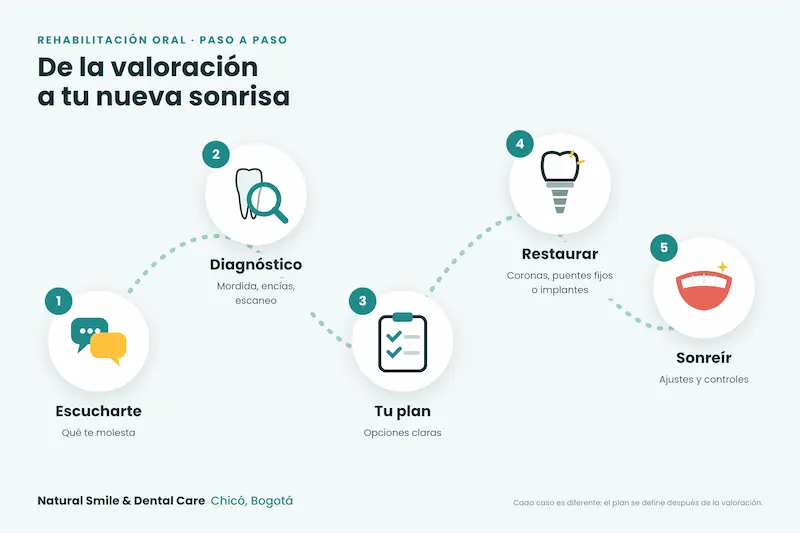
Oral rehabilitation can include different procedures, but each one has a specific indication.
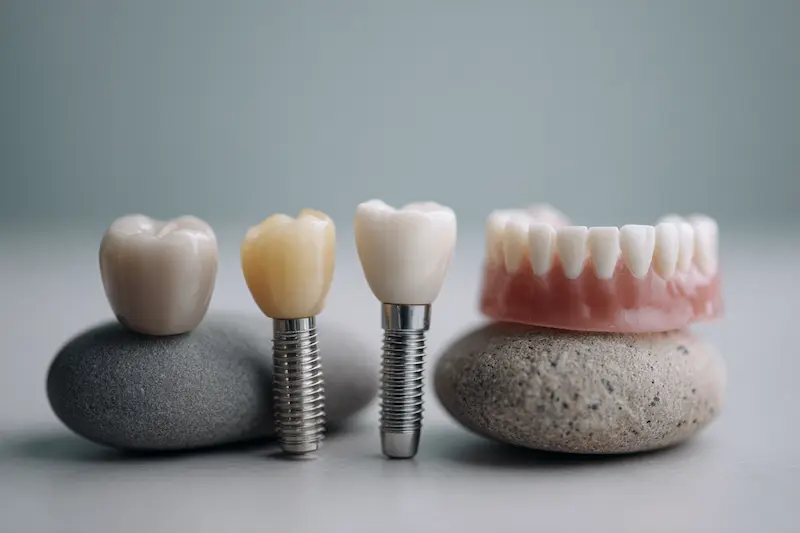
The Dental crowns are used when a tooth has lost a significant amount of structure, is weakened, or needs protection. They aim to restore its shape, strength, and function. The choice of material depends on the tooth's location, the bite, aesthetic demands, and clinical conditions.
The Inlays and onlays make it possible to rebuild a specific part of the tooth when enough structure remains. They can be a more conservative alternative to covering the entire tooth, as long as the diagnosis shows they offer adequate strength.
The Fixed bridges replace one or more missing teeth by using the neighboring teeth as support. To consider them, it's necessary to evaluate the health and strength of those teeth, as well as how they work within the bite.
The Removable partial or complete dentures can help when tooth loss is more extensive. Their design should aim for stability, comfort, clear speech, and functional chewing. It isn't enough for a denture to look good: it must also feel secure in everyday life.
The Dental implants can replace missing teeth and serve as support for crowns, fixed bridges, or dentures. However, they require a prior evaluation of the gums, bone, oral hygiene, bite, and medical history. Options for patients with partial or complete tooth loss should be selected after studying their clinical and functional conditions.
Finally, protectores para bruxismo night guards for bruxism may be part of the treatment when the patient clenches or grinds their teeth. They help protect the teeth and restorations, but they don't eliminate the habit on their own. That's why they should be combined with professional follow-up.
Your Bite Matters as Much as Your Appearance
Occlusion, that is, the way the upper and lower teeth fit together when you close your mouth, affects comfort, chewing, and how long restorations last.
When teeth are missing or there is significant wear, some teeth may receive more pressure than others. The way the jaw moves or how it feels to close the mouth can also change. Patients may describe it as a “weird” bite, an uncomfortable contact, or the feeling that one tooth hits before the others.
A well-planned oral rehabilitation seeks to integrate the restorations into the way the mouth works. This doesn't mean all bite problems can be solved with crowns or dentures. In some cases, it may be necessary to work together with orthodontics, periodontics, endodontics, or temporomandibular joint (TMJ) management.
Aesthetics must go hand in hand with function. A smile may look attractive in a photo and still cause discomfort if it doesn't respect the patient's bite.
Bruxism and Tooth Wear
Bruxism can damage both natural teeth and restorations. Some people discover they have it when fractures, sensitivity, jaw pain, or wear on the edges of their teeth appear.
If it isn't identified before rehabilitating the mouth, it can shorten the lifespan of crowns, dentures, or restorations. That's why the professional should ask about symptoms such as pain when waking up, jaw tension, headaches, flattened teeth, or frequent fractures.
Management may include a night guard, regular checkups, and adjustments to the restorative plan. Rehabilitation rebuilds the teeth, but it must also take into account the forces acting on them.
Oral Rehabilitation vs. Smile Design
Although the two treatments can complement each other, they don't mean the same thing.
Smile design focuses mainly on improving the color, shape, proportions, and edges of the teeth, the gums, and the relationship between the teeth and the face. It may include composite bonding, veneers, whitening, gum contouring, or orthodontics beforehand.
Oral rehabilitation has a broader scope. It can address tooth loss, weakened teeth, fractures, wear, unstable dentures, bite problems, and difficulty chewing.
That's why someone who wants to improve their smile may first need a rehabilitation. If there are cavities, gum inflammation, bruxism, or deteriorated teeth, the most prudent approach is to control those conditions before making an aesthetic change.
The goal isn't to apply the most eye-catching treatment, but the one that truly fits each patient's health and needs.
How Long It Takes and How Much It Costs
There is no universal timeline. A single restoration may take just a few appointments, while a full oral rehabilitation may take several weeks or months.
The time depends on the number of teeth involved, the need for implants, the condition of the gums, previous treatments, lab turnaround times, and the adjustments needed to achieve a comfortable bite.
The cost also varies from case to case. It is influenced by the type and number of restorations, the materials, the diagnostic tests, the need for dentures or implants, and any complementary treatments.
That's why a single price published without a diagnosis may not be very useful. It doesn't tell you what's included or whether other procedures will be needed later. A responsible estimate should explain what the patient needs, why it's recommended, and what alternatives exist.
At an oral rehabilitation consultation in Bogotá, the evaluation makes it possible to set priorities and make decisions based on each person's clinical conditions and circumstances.
How to Choose an Oral Rehabilitation Specialist in Bogotá
When looking for an oral rehabilitation specialist, it's worth paying attention to how the process begins. A serious practice should perform an evaluation before proposing a procedure or giving a final estimate.
It's also important for the professional to explain the bite, the gums, which teeth can be saved, and the options for replacing missing teeth. If the case involves several specialties, there should be coordination among the specialists.
Ask who will perform each phase, how long the process may take, what care will be needed, and how follow-up will be handled. Before-and-after photos can be helpful, but they don't replace a diagnosis or guarantee that the same treatment is right for you.
At Natural Smile & Dental Care, a practice located in Bogotá's Chicó neighborhood, patients can find care in general dentistry, cosmetic dentistry, orthodontics, periodontics, endodontics, and oral rehabilitation. This continuity can make it easier to manage cases that involve different specialties, without having to start over somewhere else.
Frequently Asked Questions
What does an oral rehabilitation specialist do?
They evaluate the teeth, gums, bite, restorations, wear, and tooth loss in order to design a plan that restores function, comfort, stability, and aesthetics.
Do I always need implants?
No. Depending on the case, fixed bridges, removable partial dentures, complete dentures, or implant-supported restorations may be considered.
Does oral rehabilitation hurt?
Discomfort depends on the procedure. When necessary, anesthesia is used and aftercare instructions are explained. Managing anxiety should also be part of the care.
Can I have oral rehabilitation if I have bruxism?
Yes, but bruxism must be identified and controlled to protect the teeth and restorations. A night guard and regular checkups may be necessary.
Can my natural teeth be saved?
In many cases, yes. It depends on the remaining structure, the gums, the root, and the prognosis of each tooth.
How long does a full oral rehabilitation take?
It depends on the complexity of the case. It may take anywhere from a few appointments to several weeks or months.
What is the first step?
Request a complete evaluation. The diagnosis lets you know what is happening and which options are most appropriate.
Restoring Your Smile Starts with Understanding Your Case
Oral rehabilitation doesn't start with choosing crowns or implants. It starts with understanding what's happening with your teeth, your bite, and the way you chew.
When there is a clear diagnosis, it's easier to make decisions, organize treatment, and know what to expect. The goal isn't to build a generic smile, but to restore a mouth that works well, feels comfortable, and reflects your natural self.
If you're searching for oral rehabilitation options in Bogotá, schedule an evaluation with Natural Smile & Dental Care. You'll learn about the state of your oral health, get answers to your questions, and receive personalized guidance on the options for restoring your bite, your smile, and your confidence.
Message us today and take the first step toward an oral rehabilitation planned just for you.
 Español
 English